
what is the rothschilds net worth

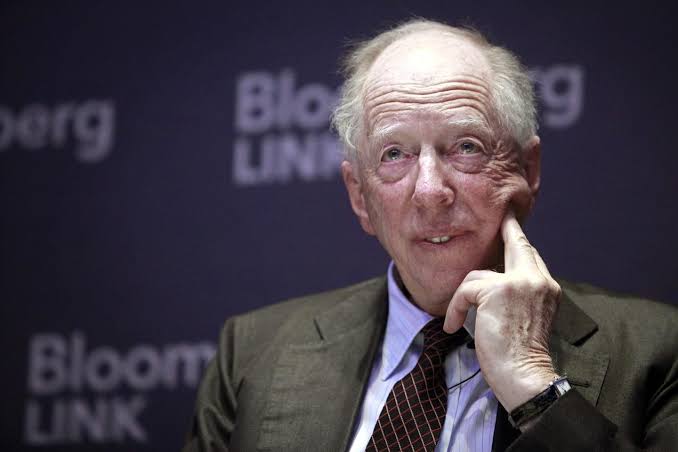
Estimated Net Worth
$1 Billion–$5 Billion
The Rothschild family is a prominent European banking dynasty whose financial legacy dates back to the late 18th century. Founded by Mayer Amschel Rothschild in Frankfurt, the family’s banking businesses expanded across several European financial centers and became influential in government finance, investment banking, and industrial development. Today, descendants of the family operate across different branches, with separate businesses, investments, and personal fortunes.
Estimating the Rothschild family’s net worth in 2026 is difficult because the family does not have one consolidated balance sheet. Its members hold separate assets, and financial businesses associated with the Rothschild name have different ownership structures. An editorial estimate of $1 billion to $5 billion provides a cautious range for discussion, but it is not an independently verified valuation of all living family members’ combined wealth. The family’s financial history and continuing business interests are better documented than any single figure for its total fortune.
Click here for: warren buffett net worth
What Is the Rothschilds Net Worth in 2026
The Rothschild family’s combined net worth in 2026 cannot be established through a single verified financial statement. For editorial purposes, a broad estimate of $1 billion to $5 billion can be used as a cautious indication of the scale of wealth associated with the family, but the range should not be treated as a confirmed valuation of every living descendant and their assets.
The family fortune is distributed across different branches, private investments, financial businesses, property, and other holdings. These assets do not all belong to one owner, and the value of a company is not the same as the personal wealth of its shareholders. For example, Rothschild & Co and Edmond de Rothschild are separate financial groups, while RIT Capital Partners is a publicly listed investment trust. Its investment portfolio belongs to the trust and its shareholders, rather than exclusively to the Rothschild family.
Career and Beginnings
The Rothschild banking dynasty began with Mayer Amschel Rothschild, who was born in Frankfurt in 1744. He initially worked in the trade of collectible coins and developed financial relationships that helped him establish a banking business. His five sons later expanded the family’s operations into major European financial centers, including London, Paris, Vienna, Naples, and Frankfurt.
Nathan Mayer Rothschild established the family’s London business and became an important figure in international finance during the early 19th century. The Rothschild banking houses participated in government finance, bond trading, infrastructure development, and other commercial activities. These operations helped establish the family’s historical prominence, although its businesses and ownership arrangements changed considerably over subsequent generations.
Business Ventures & Assets
Modern businesses associated with the Rothschild name operate in financial advisory services, wealth management, investment management, and private banking. Rothschild & Co provides financial advisory and wealth management services, while Edmond de Rothschild operates as a separate financial group. Their businesses have different ownership arrangements, so their total assets cannot simply be counted as the personal wealth of all Rothschild descendants.
RIT Capital Partners is another notable investment business with historical ties to the family. It is a publicly listed investment trust whose portfolio includes investments across multiple asset classes. The Rothschild family remains a significant shareholder, but the trust’s entire portfolio is not family-owned property. Certain family branches also have documented interests in historic estates, vineyards, art, and other investments. The ownership and value of these assets vary by individual and branch, and a complete consolidated family inventory is not publicly available.
Earnings and Income Streams
Income associated with Rothschild family members may come from private investments, dividends, business ownership, financial services, property, and other individually held assets. Financial firms bearing the Rothschild name earn revenue from their own business operations, but company revenue and profits should not be treated as direct personal income for every member of the family.
Shareholdings in investment trusts and other companies may generate dividends or capital gains for their respective owners. Some family members also have interests in vineyards, historic properties, and private investments. However, there is no reliable public accounting of the family’s combined annual earnings, and claims that it receives billions of dollars in personal income every year are not established by available evidence. Its financial position is best understood as a collection of separate family fortunes and business interests rather than one centrally controlled pool of wealth.
Click here for: adriana lima net worth
Frequently Asked Questions About what is the rothschilds net worth
1. What is the Rothschild family’s net worth in 2026?
The Rothschild family’s combined net worth is not publicly established. A broad editorial estimate of $1 billion to $5 billion can be used cautiously, but it is not an independently verified family balance sheet. Different branches hold separate assets, and published estimates vary considerably.
2. How did the Rothschild family accumulate their wealth?
The family’s wealth originated in banking and finance during the late 18th and early 19th centuries. Mayer Amschel Rothschild established a financial business in Frankfurt, and his five sons expanded banking operations across Europe. The family’s historical activities included government finance, bond trading, and investments in commercial and industrial projects.
3. Is the Rothschild family still wealthy in 2026?
Yes. Members of the Rothschild family continue to hold interests in financial businesses, investment firms, property, and other assets. However, their wealth is spread across separate individuals and branches, so it should not be described as a single centrally controlled fortune.
4. Who are the richest members of the Rothschild family in 2026?
There is no reliable, comprehensive public ranking of the wealthiest living Rothschild family members. Some descendants have documented interests in financial businesses and investment vehicles, but the full value of their personal assets and liabilities is not publicly consolidated. Naming a single richest member without reliable financial evidence would be speculative.
5. Does the Rothschild family own central banks?
No credible evidence supports the claim that the Rothschild family owns central banks. Central banks have different ownership and governance structures depending on the country, and private family ownership of the global central banking system is a debunked conspiracy claim. The family’s historical involvement in banking and government finance does not establish ownership of central banks.
6. How much of the world’s wealth does the Rothschild family control in 2026?
There is no credible evidence that the Rothschild family controls a substantial percentage of global wealth. Its members have documented financial and investment interests, but no verified consolidated balance sheet establishes the family’s total wealth or its share of global assets. Claims that the family secretly controls a large portion of the world’s wealth are unsupported.
7. Are the Rothschilds the richest family in the world in 2026?
There is no reliable evidence that the Rothschild family is the world’s richest family. Public wealth rankings have identified other dynasties, including the Walton family, whose fortune is linked to Walmart. Rankings depend on the assets included and the methodology used, and the Rothschild family’s combined wealth cannot be reliably compared without a verified consolidated valuation.
8. What businesses do the Rothschilds own in 2026?
Businesses associated with members of the family include Rothschild & Co, Edmond de Rothschild, and investments linked to RIT Capital Partners. These entities have distinct ownership and governance structures. Some family branches also have interests in vineyards, historic estates, and other investments, but it would be inaccurate to describe every business associated with the Rothschild name as wholly owned by the entire family.
9. Is the Rothschild family’s wealth declining in 2026?
There is insufficient public information to determine whether the family’s combined wealth is increasing or declining. Individual family members and investment businesses experience different financial results, and there is no consolidated public record tracking the assets and liabilities of all descendants. Any claim about a precise year-to-year change would therefore be speculative.
10. How do the Rothschilds keep their wealth private in 2026?
Some family members hold assets through private companies, investment structures, trusts, and other legal arrangements. These structures can make individual ownership and valuations more difficult to assess, although disclosure requirements vary by jurisdiction and entity. The use of private investment structures does not establish claims of hidden trillions or prove that the family controls assets belonging to unrelated companies or clients.
